Essential Infrastructure Safety
,
Cyberwarfare / Nation-State Assaults
,
Fraud Administration & Cybercrime
UK Proposes Disaster Powers Over Cable Operators and As much as 14 Years for Sabotage
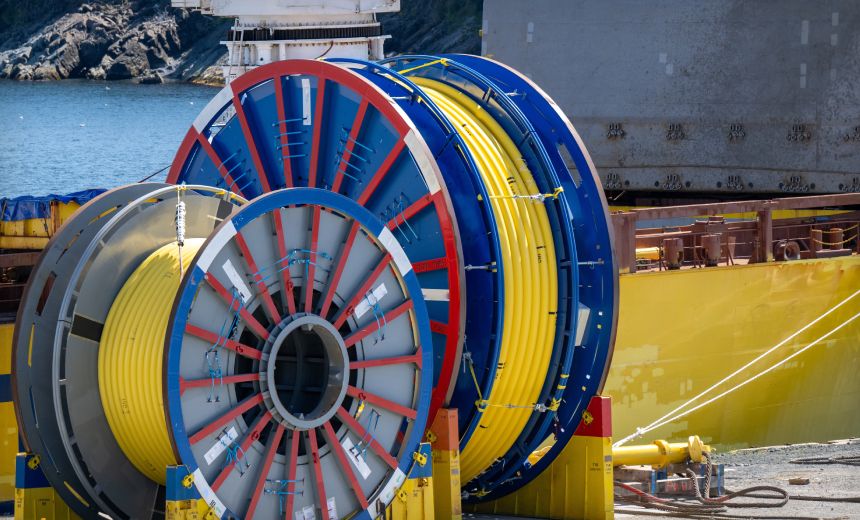
Safety analysts are calling on america to comply with the London’s lead in overhauling its Nineteenth-century undersea cable regulation after the UK authorities proposed emergency powers over cable operators and jail phrases of as much as 14 years for sabotage.
See Additionally: Why Corporations Must Put money into Safety as Response Technique
The U.Okay. authorities on Thursday printed a white paper that will let ministers direct cable operators throughout nationwide safety incidents and create new sabotage offenses.
The proposals come as British officers accuse Russia of surveying undersea cables across the U.Okay. and years of Russian hybrid warfare in Europe that has included a slew of suspicious damaged cable incidents within the Baltic Sea (see: Finland Suspects Eight in Deep-Sea Cable Sabotage Incident).
“I feel Washington would profit from following London’s lead and revising its submarine cable regulation,” Aybars Tuncdogan, an affiliate professor of digital innovation and knowledge safety at King’s Faculty London, informed ISMG. More durable penalties might do extra to discourage insiders than overseas navy operations, warning that “a overseas energy would possibly search to recruit workers or contractors with entry to cable infrastructure or important details about it to help in its operations.”
The Submarine Cable Act of 1888, the primary federal regulation aimed particularly at undersea cable injury, limits jail time for willfully breaking or injuring a cable to 2 years.
“In contrast with the two-year most penalty underneath the narrowly outlined U.S. submarine cable regulation,” Tuncdogan mentioned, “a broader regulation carrying heavy jail sentences and limitless fines could possibly be a stronger deterrent.”
Payments pending in Congress give attention to sanctions, coordination and licensing. The bipartisan Strategic Subsea Cables Act, launched within the Senate final November and within the Home in March, would require the president to sanction overseas people who deliberately injury cables and to arrange an interagency committee and federal cable technique (see: Congress Strikes to Defend Undersea Cables From China, Russia).
Reps. Rob Menendez, D-N.J., and August Pfluger, R-Texas, additionally launched a separate invoice Oct. 2 to standardize licensing and set nationwide safety necessities for cables touchdown within the U.S., with Pfluger warning that adversaries “are investing within the undersea cables that carry over 95% of our worldwide information.”
The Federal Communications Fee, which is tasked with licensing cable landings underneath a 1921 regulation, adopted guidelines in June requiring licenses for the terminal tools that connects cables to U.S. networks. The brand new guidelines presumptively exempt candidates that meet strict safety certifications from evaluation by Crew Telecom, an interagency group that vets overseas participation in U.S. telecom licenses.
“It is clear that the 1888 penalties are outdated and have little deterrent worth in opposition to state-backed actors,” Savvas Christodoulou, a researcher within the Division of Warfare Research at King’s Faculty London. The pending payments on licensing and sanctions “are helpful,” he mentioned, “however they take care of who builds cables and the way to punish afterward, not with what the federal government can do throughout an incident.”
Christodoulou mentioned a U.S. equal would wish trendy prison offenses, together with a recklessness customary to catch anchor-dragging “accidents,” together with safety obligations for operators and a transparent authority with outlined triggers, sundown clauses and “first rate congressional oversight.”
“The U.S. has ample emergency authorities already,” mentioned Andrew Grotto, co-director of Stanford College’s Program on Geopolitics, Know-how and Governance and a former White Home senior director for cybersecurity coverage. Boosting prison penalties “is smart,” he mentioned, “however we must be reasonable about whether or not prison punishments would meaningfully deter a rustic like Russia or China from damaging U.S. communication infrastructure in the event that they concluded it was essential to advance their pursuits.”
U.Okay. Safety Minister Dan Jarvis mentioned in an announcement that the nation was toughening the regulation “to remain forward of those that search to do us hurt.” Telecoms Minister Ian Murray additionally known as the cables “the hidden spine of recent Britain.”
The white paper describes the path energy as a “tightly constrained backstop” for instances the place a risk to a subsea information cable creates a nationwide safety threat. Orders might doubtlessly embrace directing operators to share capability, routing and repair-status information, modify or disable specified providers, reroute or isolate visitors and prioritize repairs based mostly on the nationwide curiosity, in addition to giving officers entry to cable touchdown stations.
U.Okay. ministers already maintain related powers over water corporations and air visitors providers . However the white paper mentioned emergency powers underneath the Civil Contingencies Act 2004 set a excessive bar for intervention and should not swimsuit fast-moving cable incidents. Instructions might additionally require operators to protect proof and maintain off on repairs amid an investigation, whereas officers might additionally preserve some orders secret.
Operators that ignore a path could possibly be fined as much as 17 million kilos – $22.8 million – or 10% of worldwide turnover, whichever is larger, plus as much as 100,000 kilos a day for persevering with violations.
Christodoulou known as the U.Okay. method “broadly right” however warned that “secret orders with out a robust authorized oversight committee might erode belief amongst cable operators and the federal government,” and that new authority over repairs “will imply little if approved ministers command assets that merely do not exist.”
Dwayne Winseck, a Carleton College professor who research web and telecom regulation, mentioned that related powers are “customary working follow in most liberal capitalist democracies and past” however could be “a lot improved if topic to courtroom orders and a lawful entry and oversight regime, as is the case for many telecoms surveillance and interception operations.”
Intentional offenses would carry as much as 14 years in jail, whereas reckless conduct would carry as much as 10 years and grossly negligent conduct as much as two years. The offenses would change the Submarine Telegraph Act 1885, which the white paper described as “very outdated.”
Tuncdogan mentioned that supporting the U.Okay.’s subsea cable safety measures “can also be within the pursuits of its allies, together with NATO members and business,” noting that a lot of the U.Okay.’s undersea cables immediately join these international locations and their industries.
“Disruptions to large-scale connectivity can have an effect on way over the U.Okay. alone,” he added.