Cybersecurity for smaller companies usually suffers by being both underpowered or too complicated. This rigidity could be difficult to resolve for small IT groups which will lack an in-house cyber skilled. Understanding the issue is just not the identical as understanding the place the answer lies.
Efficient SMB safety calls for that distributors lead their prospects by means of a transparent onboarding course of – and supply sensible and clear steerage throughout incident response engagements.
With out trusted partnerships like this, SMBs might battle to optimize the way in which they use safety services. They could discover it tough to elucidate incidents to insurers and regulators. And so they might fail to study from risk occasions in a manner that may assist to construct long-term resilience.
Complexity is in every single place
These challenges are necessary not only for SMBs themselves to beat. As they make up over 99% of all personal sector corporations in Europe and North America, small and mid-sized companies are the spine of most economies and comprise the availability chain of bigger organizations. That places them straight within the firing line of risk actors in search of weaknesses to probe, en route to shopper knowledge or community entry. Manufacturing outages at important factors in provide chains can have doubtlessly catastrophic knock-on results.
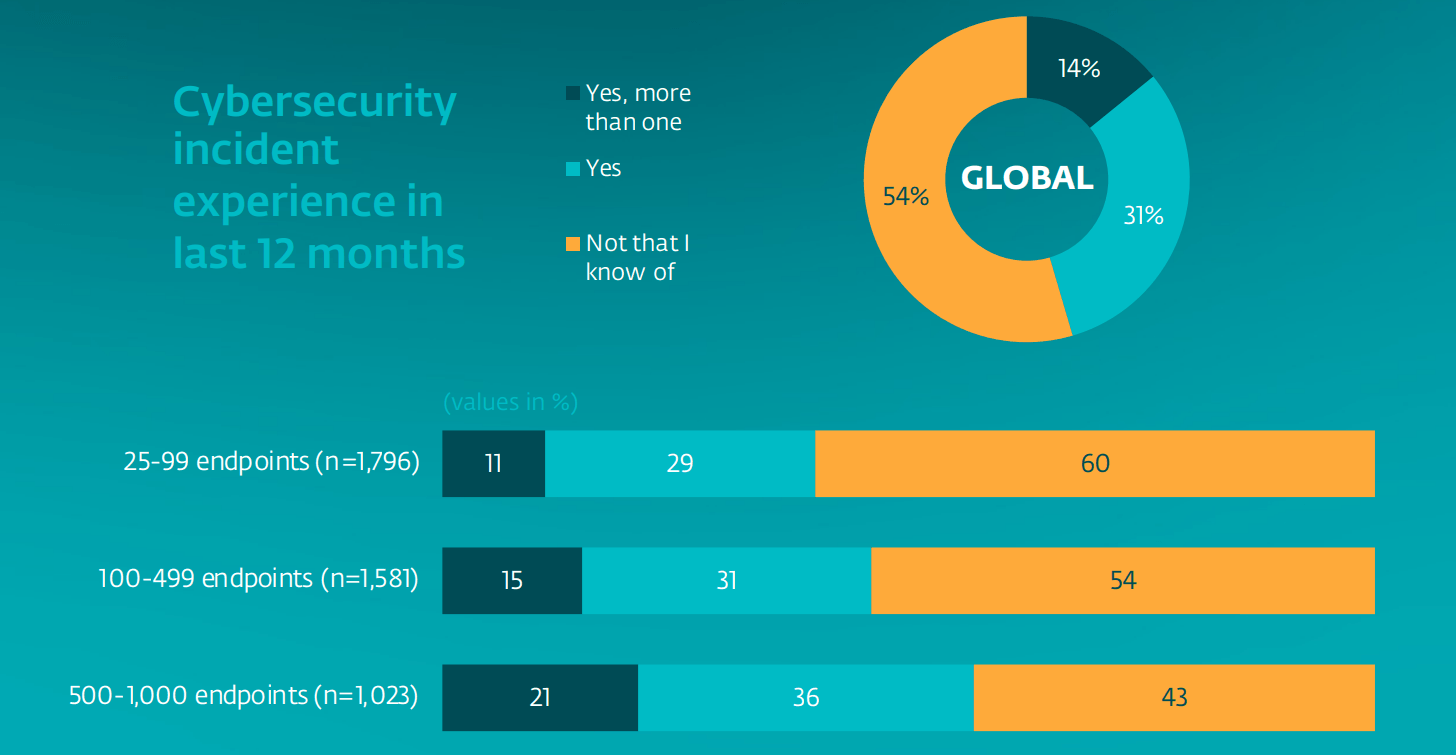
Luckily, SMB IT and safety leaders get it and more and more think about cybersecurity very or extraordinarily necessary. That could be as a result of many organizations have suffered no less than one cyber incident previously 12 months alone. These occasions are inclined to focus the thoughts, notably after they’re important or important and result in system downtime, knowledge breaches, ransomware, electronic mail compromise, and extra.
However consciousness and motion are two various things. SMBs know they want efficient safety, however their efforts to attain this usually hit a well-known roadblock: complexity. Many usually say that even maintaining with the newest developments and threats is a serious problem. The pace with which the risk panorama adjustments is only one of many contributing components.
At a primary stage, safety finest practices stay broadly the identical, as do the sorts of risk that companies can anticipate. Phishing, vulnerability exploitation, infostealers, compromised credentials, and enterprise electronic mail compromise (BEC) are nonetheless among the many hottest avenues for risk actors. AI merely amplifies and accelerates. Nonetheless, peel again the onion a layer or two and risk intelligence can grow to be intimidatingly complicated.
Understanding what a real risk to the group is and what to not fear about is commonly past the potential of a small IT safety workforce. They may have neither the time nor material experience to make an efficient evaluation. Safety usually suffers in consequence, changing into reactive and piecemeal.
Distributors could make life more durable
The cybersecurity market can compound these challenges. The sheer number of options and companies on supply is staggering. It’s a world market value an estimated $248 billion, rising doubtlessly to $699 billion by 2034. This will make it tough to check vendor choices successfully, even when they’re nominally in the identical class. And as soon as bought, some options could be difficult for less-skilled groups to configure and function. Getting the appropriate match for your enterprise is important.
Over half (55%) of SMBs surveyed by ESET argue that the cybersecurity options market is complicated and complex, whereas practically a 3rd (30%) say answer complexity is a serious problem. The language utilized by the business can be impenetrable. Round three-quarters (72%) need plain-language explanations. Many don’t know the that means of broadly used monikers like MDR, EDR and XDR.
The pathway to supervised help
But there’s some readability amongst this confusion. SMBs know that preventative safety is necessary. However additionally they understand that in some circumstances risk actors will at all times get by means of these defenses. That’s why most companies ESET speaks to need safety that goes past ‘antivirus’ (AV) and important safeguards.
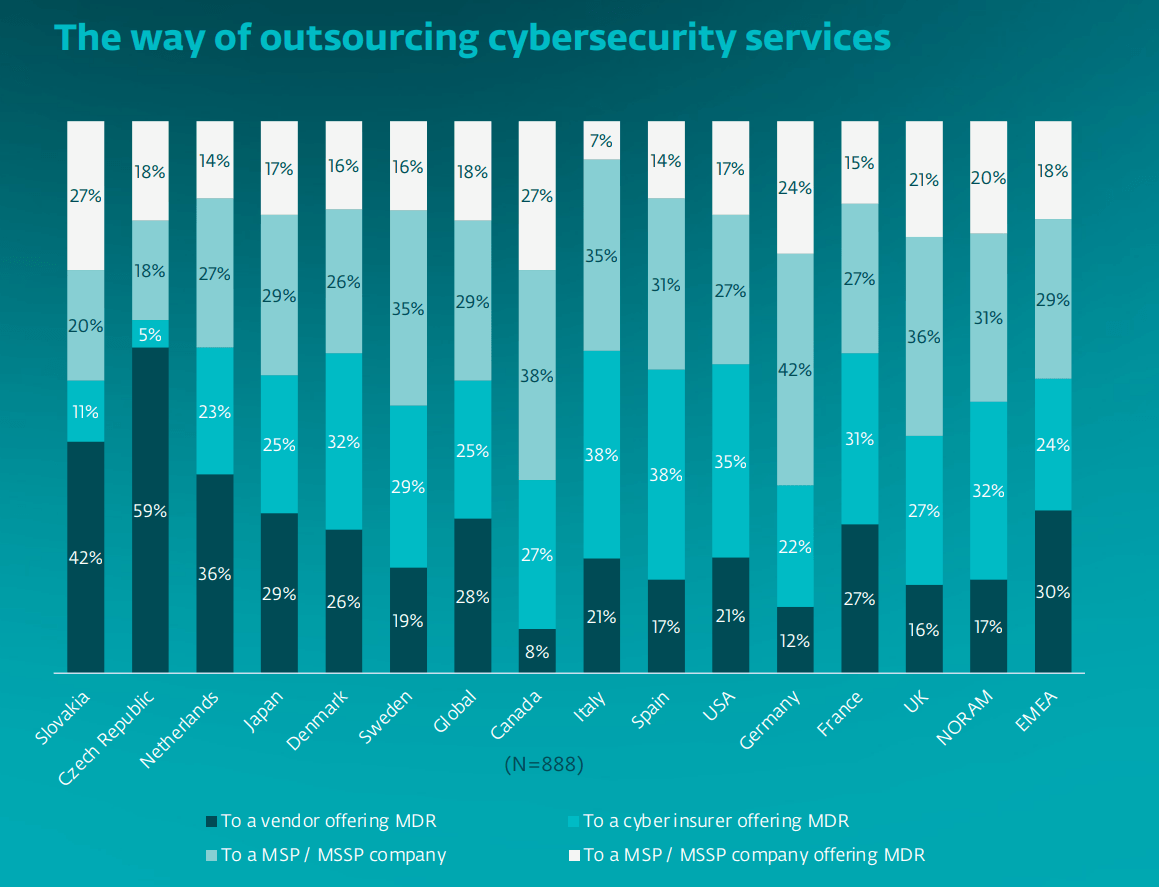
This further layer of safety ought to operate as superior help for specialised threats, complementing in-house administration of primary safety controls. Fundamental options will block malicious executables, for instance, however what about subtle risk actors residing off the land utilizing safe-looking instruments? Or an AI-discovered zero-day exploit for which there isn’t a signature? Detecting these threats is the ability of companies like MDR.
The problem is that they don’t work out of the field. Their effectiveness is determined by how effectively a supplier’s individuals, processes, and expertise are aligned along with your atmosphere. Protection is important, as gaps can imply potential blind spots that hackers can exploit. If any exist, they need to be effectively documented and recurrently reviewed as your IT atmosphere continues to evolve.
Visibility should additionally prolong to the tooling that you’ve in place. Each group is completely different. Which means specialist MDR groups should make clear at onboarding the precise IT setup of the shopper, to allow them to shortly spot if an unsanctioned instrument (like distant monitoring software program) seems, which can point out malicious exercise.
All of which makes onboarding and setup an important first step in a profitable MDR engagement.
What guided onboarding ought to embrace
Most SMBs need step-by-step steerage on organising a brand new cybersecurity services or products. This can guarantee it’s built-in seamlessly into day-to-day operations. However what ought to that onboarding embrace?
- A dwell onboarding session with a vendor skilled offers an important alternative to ask questions as you’re being onboarded. Technical documentation is beneficial to seek advice from in some circumstances. However it will probably simply grow to be overwhelming for less-skilled IT professionals. That’s why a dwell on-to-one session is invaluable; serving to you to fill within the gaps with plain English explanations and study by means of doing, not studying.
- Activation of the atmosphere ensures it’s all up and working and helps you get an early feel and look of what to anticipate.
- Configuration and readiness checks are important to make sure the service is optimized to work along with your atmosphere. Activation is simply step one. Configuration will get it operational. These checks are necessary to do throughout guided onboarding as they might be difficult for a non-specialist workforce to carry out by itself.
- Steering on notification, reporting and communication is about serving to you perceive how alerts will come by means of and the way reporting is dealt with. You’ll study who will get the notifications in your aspect and what shall be anticipated of them after they do. It’s very important to get this proper as a way to stop communication gaps between your workforce members and between your workforce and the seller.
- An all-in-one installer will help to streamline deployment throughout all related endpoints, minimizing the configuration workload, and decreasing time and human error.
- Working by means of MDR operations, incident workflows and reporting is about understanding how your vendor accomplice investigates and communicates incidents, and find out how to interpret experiences. It’s about setting expectations on what your tasks are as soon as the supplier has recognized an incident. Few distributors will care for the complete incident and remediation workflow so realizing what’s anticipated of your workforce is critically necessary.
- A ultimate set of finest practices and next-step options will form your understanding of find out how to preserve the service over time, because the IT atmosphere and risk panorama change. Prioritizing what issues most when you’re up and working is beneficial for groups with few assets who’re dedicated to steady enchancment.
Above all, do not forget that the engineer is there to information you thru the method, not do all of the heavy lifting themself. It’s about supplying you with the know-how to make the partnership a hit, and optimize your use of the services or products.
When completed accurately, it ought to imply quicker time to safety, a decrease danger of misconfiguration, and improved confidence you can get probably the most out of your funding.
Steering throughout use
When you’re up and working, a great vendor ought to information you thru the method of incident detection and response. Which means serving to you to grasp:
- What occurred: Explaining an incident in plain English. What sort of risk was detected. Which IT methods have been affected. How the adversary gained preliminary entry. Whether or not knowledge was compromised or stolen. And what stays unclear.
- Why it issues: Your vendor ought to assist by translating technical into enterprise dangers. That can provide help to perceive what the implications are for the group, fairly than considering solely in IT phrases. For instance, a vulnerability exploitation might have enabled entry to a buyer database, which may elevate the prospect of information loss and a GDPR investigation.
- What the supplier did: Your safety accomplice ought to element precisely what steps it took to research and include the risk, akin to resetting passwords or isolating accounts. And what has but to be completed.
- What occurs subsequent: That is crucial a part of the steerage. Your supplier ought to present actionable subsequent steps, ideally so as of significance. It may embrace patching an exploited system, enabling MFA, restoring knowledge from backups, and so on. These suggestions needs to be clear, together with who’s accountable and perfect timelines. As a result of when intrusions occur, minutes matter.
They need to additionally include supporting proof akin to logs that can be utilized to share with auditors, regulators and insurers if required. And to tell any buyer outreach or enterprise continuity efforts (akin to restarting methods) which may be required. Proof can be important to reduce the probabilities of the same incident occurring once more. Resilience is all about studying the teachings of every intrusion to shut off potential pathways for future threats.
Transparency is important
If SMBs don’t obtain this sort of readability and element throughout dwell incidents, there’s a danger that they might mistakenly consider malicious exercise has been remediated, when the truth is there’s work left to do to include and resolve the problem. That may enable the blast radius of an assault to unfold, inflicting extra injury.
Clients, regulators and different stakeholders may additionally stay at midnight, creating further reputational and monetary danger. And the group itself is not going to have the forensic data at hand to enhance cyber resilience going ahead.
Basically, for those who’re unable to find out what actions your supplier took, you’ll be able to’t calculate whether or not their service is definitely worth the cash you’re paying for it.
The worth of human relationships
SMBs perceive the worth of cybersecurity. And so they know that the risk panorama is changing into extra unstable, doubtlessly imperilling their enterprise. However these with out enough experience are pissed off by the “identified unknowns” that stop them from understanding how the newest threats and developments have an effect on their group.
That is the place safety distributors should step up. They’re trusted by extra SMBs than another entity – together with inside workers, business friends, and governments – as a trusted supply of cybersecurity steerage.
SMBs don’t wish to hand over all management for risk safety. They wish to be empowered by trusted companions to maintain their enterprise safer. On the heart of this dynamic sit human relationships – and we all know that SMBs worth entry to a human skilled.
The important thing for distributors is to make sure these consultants can be found at onboarding, to information SMBs by means of configuration, activation and setup. And that they’re readily available throughout incident response, to elucidate what occurred, why it issues, what steps have been taken, and what there’s left to do. It’s the form of supervised safety that might flip cybersecurity from a value of doing enterprise into a real progress enabler for SMBs.