Not less than 178 prime net locations unwittingly served quite a lot of malware exploits in opposition to guests over the previous 24 hours due to a safety vulnerability involving Optimizely, an organization that helps web sites customise person experiences and check out new options. Specialists say the incident, which noticed data-stealing malicious software program silently injected into websites just like the BBC, CNN, Equifax, Ledger and Zoom, was exacerbated by the fact that few in style web sites implement strict guidelines on the sources of third-party content material.

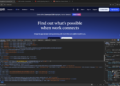
The Zoom.com homepage loading the malicious JavaScript file from Optimizely. Picture: weblog.report-uri.com. Click on to enlarge.
In accordance with a weblog put up from the safety agency Report URI, on November 16 malicious JavaScript code was served to guests of 178 organizations by Optimizely’s platform. Report URI researcher Scott Helme wrote that the payload delivered by the malicious Javascript was rebuilt 26 instances in the course of the day, dropping a multi-purpose malware equipment that would steal fee card knowledge, cookies and screenshots, and swap any cryptocurrency fee addresses for the attacker’s.
Helme famous the affected web sites additionally served exploit code customized made to assault recognized vulnerabilities in older Apple iPhone and iPad units. Identified by such names as “DarkSword” and “Coruna,” these are zero-click exploit kits that chain collectively a half-dozen safety holes to grab full management over outdated units and extract knowledge.
“The necessary lesson right here is that trusted JavaScript doesn’t all the time stay reliable,” Helme wrote. “An internet site will be compromised by a third-party dependency with out its personal code or infrastructure ever being breached.”
Contacted for remark, Optimizely mentioned that on November 16, 2026 it “recognized a safety incident through which an unauthorized social gathering exploited a vulnerability within the Optimizely Experimentation so as to add malicious JavaScript to some buyer initiatives.”
“We acted swiftly to include the incident and have totally remediated the recognized vulnerability,” reads a written assertion shared by Optimizely. “These measures included blocking entry to the weak path, deploying a repair, eradicating the injected code from affected initiatives, ending energetic periods, revoking tokens, and resetting entry for affected person accounts. We’ve additionally carried out extra protections to stop malicious code from being delivered in Cloudflare. Whereas the incident has been totally remediated, we’re working with third-party consultants on a complete investigation.”
Many prime net properties now not totally show content material until guests conform to let usually dozens of third events serve JavaScript, a strong net scripting language that permits interactive content material. JavaScript code is run on the person’s system, and it may possibly learn data displayed within the person’s browser and even modify a web site’s look or content material.
One purpose JavaScript is so closely used is that it allows pretty exact browser fingerprinting and different methods of monitoring guests and clicks. In accordance with the 2025 Internet Almanac by HTTP Archive, the median homepage masses not less than 22 JavaScript recordsdata. However because the incident with Optimizely reveals, a compromise at a third-party vendor’s web site can shortly snowball right into a provide chain assault in opposition to downstream web sites that find yourself serving guests tampered and malicious JavaScript recordsdata.
Zach Edwards is a researcher at Infoblox and the co-founder of the ad-tracking service DecryptAds. Edwards mentioned Optimizely is a vendor which frequently collects knowledge exterior of consent flows, with their JavaScript snippets being embedded as near the highest of the web page as attainable to make sure that it’s one of many first issues to render, which is necessary for the reason that product is primarily constructed for A/B testing.
“So to make the product work as anticipated, this code is setup to fireside instantly on-page load, and never limit rendering behind a consent dialog field,” he mentioned. “Because of this this provide chain assault didn’t require any clicking or consent to set off — many of the impacted purchasers would instantly serve up the payload as quickly as somebody loaded the web page, additional rising dangers from the sort of JavaScript snippet being compromised.”
Web sites can decrease the probabilities {that a} breach at a third-party content material supplier spirals right into a provide chain assault by taking full benefit of “Content material Safety Insurance policies” or CSPs, which specify the domains which are allowed to serve third-party content material. However Edwards mentioned most web sites — other than maybe the most important e-commerce, social media and monetary platforms — don’t even trouble with CSPs, or else have a tendency to go away them overly permissive for advertising causes.
“With actually all web sites which embed third social gathering JavaScript sources, in case you don’t have a content material safety coverage then if any of these companions get compromised, new domains will be injected into your web site through JavaScript which gained’t be stopped,” he mentioned. “We’re within the age of JavaScript provide chain assaults and but nearly nobody is speaking about why content material safety insurance policies had been invented and the way that is largely the answer for operators, despite the fact that it’s not all the time easy to get it initially deployed.”
How broadly deployed had been CSPs on the web sites impacted by the Optimizely assault? In accordance with Report URI, 68 of the websites had no CSP in any respect, whereas 50 of them had a CSP that also allowed the malware payload and the info theft. The corporate discovered solely 24 of the affected websites (15 p.c) had CSPs that totally blocked the malicious payload.

Picture: weblog.report-uri.com.
The general deployment of CSPs throughout the Internet’s busiest websites is considerably decrease — about 10 p.c — in response to Helme’s web site crawler.ninja, which scans the highest million web sites each day for safety points. Helme mentioned he hopes this incident will encourage extra websites to undertake efficient CSPs, noting that it may have been far worse: By Report URI’s estimates, the purveyors of this malware assault managed to steal solely round $7,500 price of digital foreign money from affected customers, in addition to an unknown variety of fee card information.
Helme mentioned he usually compares the present widespread lack of CSPs to the Wild West.
“Organizations are operating all this code, however they don’t know what it’s doing,” Helme mentioned in an interview with KrebsOnSecurity. “This is the reason we preserve seeing such giant scale breaches in locations [where] there are not any checks and guidelines in place on the code we’re operating, so this was form of inevitable. As soon as an attacker will get to the purpose of operating code in your web site, the query is what do they need to do with that and may they write the script to do it. Now with AI that’s not an issue anymore.”
Web customers can management the JavaScript parts allowed to run on webpages by utilizing easy script-blocking plugins like NoScript. However these instruments have all the time solely been efficient for diehard safety and privateness nerds who’re prepared to place up with sifting by dozens of JavaScript requests on every new web site.
Fortunately, trendy advert blocking software program can handily block most third-party JavaScript requests. Ten years in the past, the usual safety recommendation for finish customers was to put in antivirus and allow a firewall. As of late, your advert/script blocker is your firewall. We explored a number of choices and approaches to blocking advertisements in our August 2026 story, Who’s Monitoring You?