The US Division of Justice (DoJ) has introduced costs, convictions, sentences, extraditions and different authorized actions towards greater than 800 defendants throughout 400 circumstances involving scams and on-line fraud since March. The circumstances cowl a spread of schemes, from cryptocurrency funding fraud and impersonation scams to fraudulent name facilities.
Introduced on November 24 in a press launch, the motion additionally concerned abroad raids, extraditions and efforts to get better cash stolen from victims. US authorities labored alongside legislation enforcement in additional than 10 nations on this effort.
The crackdown follows President Trump’s March 6 Government Order 14390, which directed federal businesses to accentuate efforts towards on-line fraud.
Rip-off compounds, stolen funds and compelled labor
As a part of the crackdown, the FBI is working to dismantle rip-off networks via Operation Blackout- its world initiative to determine and dismantle rip-off compounds and disrupt the prison networks behind them. The bureau reportedly has restrained practically $17 billion in illicit funds, seized greater than 14,000 digital units, and helped dismantle over 29 rip-off compounds throughout Asia, Africa, and the Center East.
This is a vital a part of the crackdown as a result of the operation helped free and repatriate greater than 2,200 individuals who had been trafficked into the compounds and compelled to hold out scams. Hackread.com has reported on fraud operations that depend on individuals who themselves are victims of trafficking.
In April, an investigation linked a Cambodian rip-off compound to an Android banking trojan focusing on customers in 21 nations, exhibiting that these amenities can help extra than simply on-line funding fraud.
US businesses sort out fraud at house
A number of businesses reported their very own enforcement outcomes. Homeland Safety Investigations made greater than 300 arrests and reported over $120 million in illicit proceeds seized, restrained, frozen or recovered. The Secret Service, in the meantime, restrained greater than $200 million in illicit funds, disrupted 1,780 scam-related domains and investigated over 1,540 enterprise e mail compromise incidents.
The Securities and Alternate Fee additionally filed actions towards 39 entities accused of utilizing false adviser registration filings to look respectable and appeal to buyers. In the meantime, the Federal Communications Fee permitted jail phone-jamming guidelines to cope with scams carried out through smuggled cellphones.
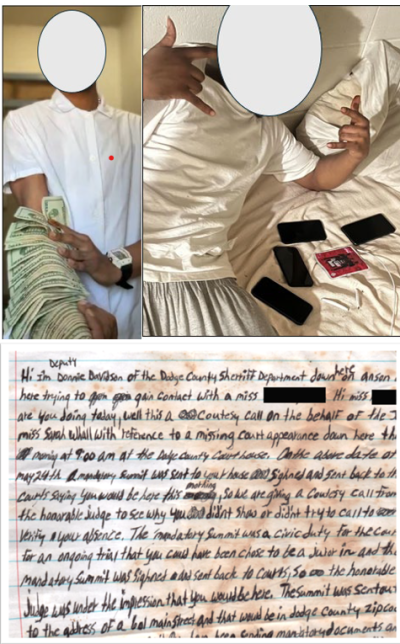
In Georgia, inmates allegedly used contraband telephones to impersonate court docket officers, telling victims into that that they had missed jury obligation and confronted arrest until they paid a faux wonderful. Fourteen individuals had been charged in these schemes, whereas one other 17 confronted costs associated to smuggling telephones into prisons.
The circumstances present how scammers hold exploiting every little thing from on-line platforms and funding schemes to telephone calls. Regardless of the crackdown, the dimensions of the issue stays excessive, with Gallup estimating People misplaced $68 billion to scams in 2025 and 10% of US adults experiencing a rip-off instantly or via somebody of their family.
Professional’s Commentary
Dave Hayes, Vice President of Product at cybersecurity firm FusionAuth, shared his ideas with Hackread.com on why fraudsters can bypass financial institution safety checks by manipulating victims into making funds themselves, and what banks might do to identify suspicious transactions.
“In a lot of the scams on this crackdown, the financial institution checked the appropriate particular person, as a result of the sufferer logged in on their very own telephone and despatched the cash themselves. No one checked the caller who was posing as a court docket or a financial institution and telling them to do it. The scammer has no authority over the account, in order that they work via the one one that does.
“Once we resolve whether or not to belief a login, a brand new gadget is normally only a new telephone, however a brand new gadget an hour after a password change is a motive to ask for extra proof. A telephone name will be checked the identical method. Look ahead to a quantity you don’t know, strain to pay as we speak, a request to maneuver cash someplace new, and a narrative that may’t be true, like a court docket that takes fines at a crypto kiosk.”
“If two of these present up on one name, cling up and name them again on a quantity you search for your self. Banks ought to run that examine on the cost, even after the login passes. A primary switch to a crypto alternate, for greater than the client has ever despatched anyplace, must be held till the financial institution has spoken to them.”