Cyberwarfare / Nation-State Assaults
,
Fraud Administration & Cybercrime
Most NATO Help to Ukraine Travels By means of Poland
Polish authorities had been first tipped off about Russian cyber threats to their nationwide transportation and energy programs by the US, the pinnacle of Poland’s Cyber Command instructed the Billington Crucial Infrastructure Cybersecurity Summit in San Antonio, Texas this week.
See Additionally: OnDemand | How Okta and CrowdStrike Share Alerts to Implement Safety Towards Cross-Area Assaults
Parts of U.S. Cyber Command additionally labored with their Polish counterparts to hunt Russian hackers on Polish networks. “It truly began with you guys, with the help from U.S. establishments,” Maj. Gen Mariusz Chmielewski mentioned at a fireplace chat Tuesday, the place he gave new particulars in regards to the context and setting of a large-scale, however in the end by Russian hackers to close down components of Poland’s energy grid simply after Christmas final yr, when the nation was gripped by a fierce winter freeze and the temperature was 5-10 levels Fahrenheit.
Technical components of the assault had been disclosed in extraordinary element earlier this yr by CERT-PL, the nation’s nationwide Cyber Emergency Response Group.
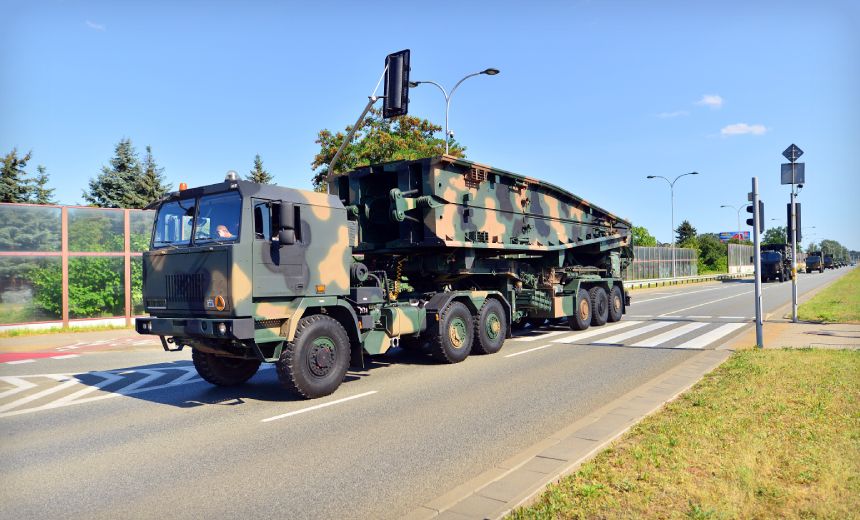
After the full-scale Russian invasion of Ukraine in February 2022, defined Chmielewski, Poland grew to become the virtually unique route by which army assist from the North Atlantic alliance may attain Ukraine.
“A minimum of 90% of that [aid] goes by means of Poland” arriving by sea or air and brought by highway or rail to Ukraine, he mentioned, in uncommon feedback from Poland’s prime cyber warrior.
Later that yr, the U.S. instructed Poland’s Cyber Command that knowledge about army transports taken from the networks of Polish personal sector transportation operators had been discovered within the possession of Russian intelligence providers, Chmielewski mentioned.
The command’s response was three-fold. It inspired the businesses to harden their cyber defenses and put in sensors on their networks “to offer the visibility [of] what’s going on within the system.”
Along with these purely defensive measures, Chmielewski mentioned, the Poles and their U.S. allies went searching on these networks. “Risk searching is simply going into the system, discovering the threats, and eliminating the threats,” he mentioned, “And that is what we [are] good at, and we all know that a few of our companions from right here in Texas, the sixteenth Air Drive, are literally serving to with that loads. So they’re good at that. Belief me,” he mentioned, referring to the U.S. Air Drive element of U.S. Cyber Command, positioned simply exterior city at Joint Base San Antonio.
To reply and safe Poland’s transportation and logistics sectors, Polish forces wanted to succeed in out to the civilian area, added Col. Michal Golak, who leads the Cybersecurity Division of Warsaw’s Cyber Command. However to determine who to method, he defined, the command had first to grasp and analyze the cross-sectoral dependencies impacting the focused sectors
“In fact, the ability grid. That is an underlying layer for many of those capabilities. Everybody wants vitality to provide their very own options, it could be telco corporations, could be transportation corporations, railways, and so forth,” Golak mentioned.
Dependencies inside sectors additionally needed to be understood, added Golak, giving for instance the best way that the hackers, attributed by CERT-PL to the Russian state safety company the FSB, had been about to maneuver laterally and unfold by means of the OT community of a number of energy stations and renewable vitality vegetation.
“That was the primary case the place we found [hackers using a] personal APN” or Entry Level Identify, mentioned Golak. A non-public APN is a devoted mobile community path that routes knowledge from approved units immediately throughout the cellular provider’s personal infrastructure into a company’s personal community or cloud with out traversing the general public web.
OT operators use personal APNs to maintain their site visitors safely remoted, and to safe their units from internet-based assaults, Golak defined. However on this case, the APN grew to become the purpose of entry, which the attackers used “to maneuver between one compromised asset to a different [and] to achieve entry to different parts” of the ability grid, Golak mentioned.
“These sorts of dependencies are essential to be recognized and to establish assess safety of such applied sciences used for OT on this case and the way they could be exploited by the opposite aspect,” Golak concluded.