Correct, up-to-date local weather projections are important for planning selections that improve the resilience of energy grids, defend public well being, maximize agricultural yields, and extra.
Now, MIT researchers have developed a method that streamlines the manufacturing of quick, reliable, and adaptable synthetic intelligence fashions for local weather prediction.
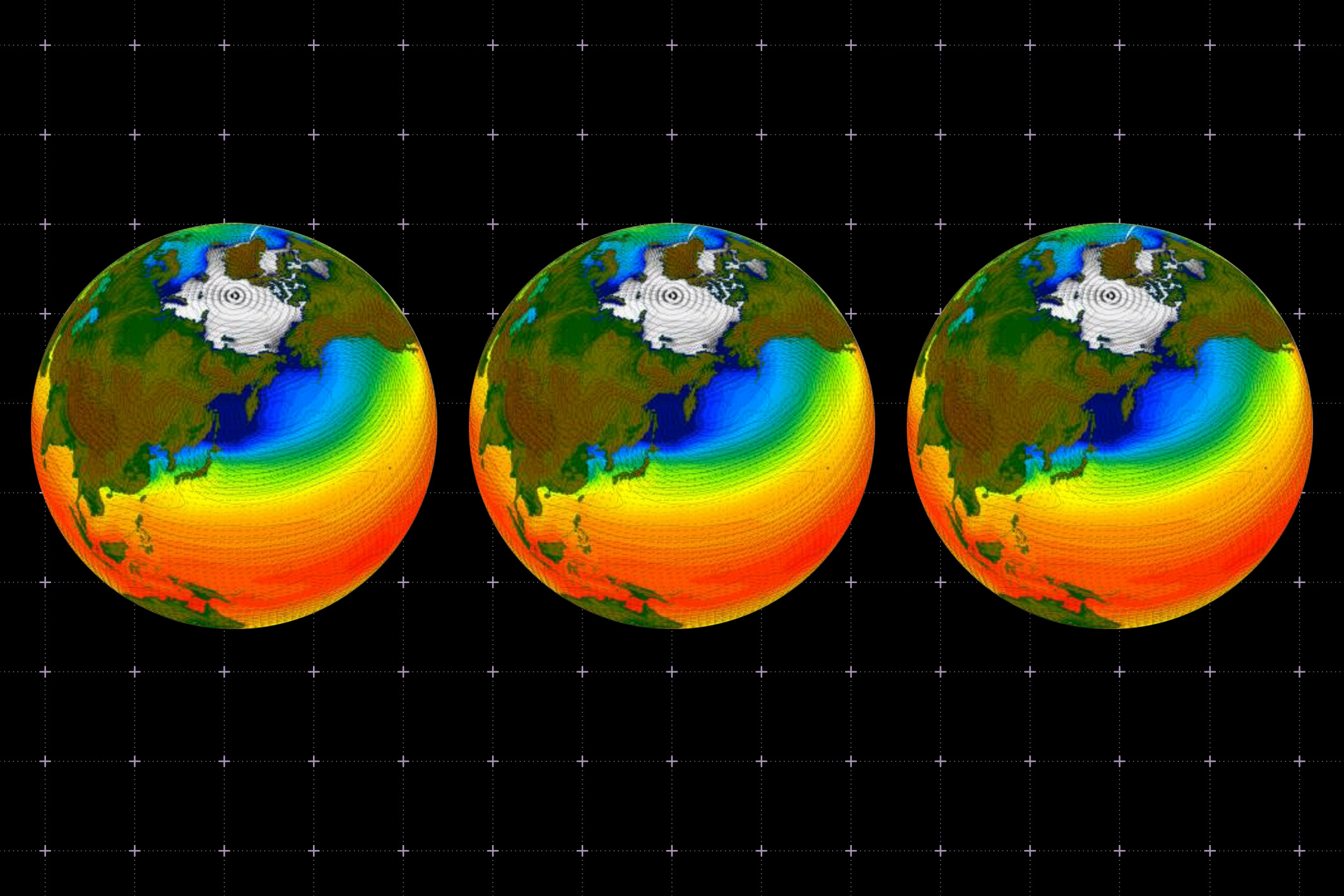
These specialised AI fashions, referred to as local weather emulators, can quickly simulate the results of human actions onto a future local weather, predicting impacts on temperatures or sea degree, for instance.
As a result of emulators run in a matter of seconds, scientists use them to effectively check hundreds of various local weather situations. This offers extra dependable estimates and may establish surprising outcomes of regional interventions.
The MIT researchers developed a coaching approach that enhances the efficiency and flexibility of a local weather emulator whereas utilizing solely a fraction of the info usually required. This considerably cuts manufacturing time for these sensible scientific instruments.
They present that an emulator skilled with a a lot smaller quantity of fastidiously chosen artificial knowledge precisely predicts outcomes of situations it didn’t see throughout coaching, whereas conventional emulators did not adapt to new conditions.
“Local weather emulators are particularly well-suited for modeling policy-relevant situations. Through the use of our methodology to generate optimized coaching knowledge for an emulator, we are able to pace up the manufacturing of rather more dependable emulators, so we are able to higher belief their outputs for making coverage selections,” says Christoher Womack PhD ’26, who’s now a postdoc at ETH Zurich and lead writer of a paper on this method.
He’s joined on the paper by Shahine Bouabid, a postdoc within the MIT Division of Earth, Atmospheric and Planetary Sciences (EAPS); Andrei Sokolov, a analysis scientist in MIT’s Middle for Sustainability Science and Technique (CS3); Popat Salunke, a postdoc in CS3; Glenn Flierl, a professor of oceanography in EAPS; Sebastian D. Eastham, an affiliate professor at Imperial School London; and senior writer Noelle E. Selin, a professor within the MIT Institute for Knowledge, Methods, and Society (IDSS) and EAPS, and director of CS3. The analysis seems this week within the Proceedings of the Nationwide Academy of Sciences.
Speedier surrogates
Local weather scientists usually use earth system fashions (ESMs) to make long-term projections about how world temperature or precipitation might change in response to various greenhouse fuel emissions.
These monumental, physics-based fashions seize the key elements and interactions of the earth’s local weather in excessive element. Whereas highly effective, ESMs can take months to run on a cluster of supercomputers — and that’s solely to venture one potential future local weather situation.
Selin and her collaborators design local weather emulators, that are quick AI surrogate fashions that mimic the habits of full-scale ESMs. Emulators assist scientists check many situations, make extra correct forecasts, and discover particular pollution and regional results.
“Local weather emulators can run in just some seconds, so it actually expands what we are able to do when it comes to exploring these future local weather situations,” Womack says.
When scientists design a local weather emulator, they usually practice the AI mannequin utilizing a set of six to eight future situations based mostly on practical future trajectories of emissions. They need to run every situation by a full-scale ESM, making these datasets pricey and time-consuming to generate.
The MIT researchers not too long ago discovered that utilizing practical future situations as coaching knowledge can result in underperforming emulators that fail to foretell unfamiliar or novel situations.
On this work, they developed an algorithm that generates an artificial dataset of optimized local weather situations tailor-made to spice up one emulator’s predictive efficiency.
“Our algorithm would possibly generate some bizarre situations which look nothing like a sensible future, however we don’t care a lot if the coaching situations are practical. We’re simply making an attempt to make the very best dataset to coach an emulator,” Womack says.
Importantly, moderately than needing to run a full ESM six or eight occasions to generate coaching knowledge, a consumer would solely have to run that mannequin as soon as.
Tuning the coaching knowledge
The researchers start by producing an arbitrary local weather situation utilizing a quick and easy local weather mannequin. They check how nicely their emulator can reproduce the outcomes of that ESM, which supplies them a measure of error.
Due to the programming approach they used to construct the coaching pipeline, they will iteratively replace the coaching knowledge to extend the emulator’s predictive talent. For example, the algorithm might improve CO2 emissions dramatically within the 12 months 2050 or quickly lower methane emissions in 2037.
Then the optimization updates the coaching knowledge till the emulator’s error degree reaches a sure threshold.
In the long run, moderately than resembling practical situations through which emissions comply with clean trajectories, the artificial knowledge comprise speedy variations.
“By introducing these high-frequency wiggles and oscillations, our knowledge allow the emulator to extract much more details about the general system,” Womack explains.
Their coaching algorithm outputs these emissions situations, which they will use to coach an emulator that’s extra correct and adaptable.
“Sooner or later, we’re undoubtedly going to see climates and situations we haven’t seen earlier than. If we are able to simulate these totally different situations extra robustly, we are able to present extra dependable data to the stakeholders who want it,” Selin says.
For example, an emulator skilled with their approach can seize the results of native pollutant management insurance policies that scale back one pollutant whereas different emissions proceed rising. The normal emulators they evaluated failed this check.
In the long term, Womack hopes this work improves the usefulness of quick and adaptable local weather emulators for coverage formulation.
“That is such an essential piece of the pipeline in terms of creating helpful instruments that talk to stakeholder wants. As a result of the method of coaching an emulator can takes months and even years, the emulators we’ve got are often out-of-date. By chopping down that manufacturing time, I feel this method might be a game-changer when it comes to getting up to date instruments into the fingers of researchers and practitioners,” Selin provides.
Sooner or later, the researchers wish to check their approach utilizing an emissions situation generated by a full ESM. In addition they wish to apply it to different forms of local weather fashions and discover its effectiveness in broader machine studying and pc imaginative and prescient purposes.
This analysis was a part of the Bringing Computation to the Local weather Problem (BC3) venture and supported by Schmidt Sciences by the MIT Grand Challenges.